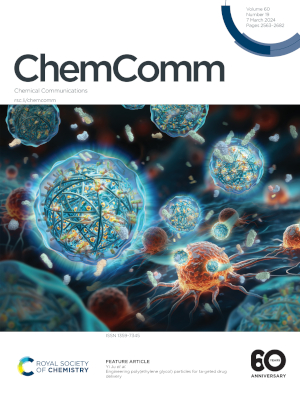
The Nanostructured Interfaces and Materials Science (NIMS) Group was renamed as the Caruso Nanoengineering Group in November 2020.
CNG postdocs Dr Jingqu Chen and Dr Omid Mazaheri both awarded an Early Career Researcher Grant
October 2024
Congratulations to CNG postdocs Dr Jingqu Chen and Dr Omid Mazaheri on each being awarded a 2025 Early Career Researcher (ECR) Grant, The University of Melbourne.
Jingqu’s project entitled “Engineering Metal–Phenolic Nanovaccines for Cancer Immunotherapy” aims to develop a versatile and biocompatible nanovaccine platform based on metal–phenolic networks and to evaluate their immune responses and efficacy in cancer immunotherapy. The project outcomes are expected to advance the development of next-generation vaccines for the prevention and treatment of multiple diseases.
Omid’s project entitled “Developing Plant-Beneficial Microorganism Carriers as Biofertilisers Using Polyphenol–Based Hydrogels” aims to develop biofunctional polyphenol-based hydrogels by integrating plant-beneficial microorganisms, contributing to the promotion of soil health, enhancing biodiversity in agricultural ecosystems, ensuring food security, and promoting sustainable agriculture by minimizing GHG emissions and nitrate leaching.
The ECR Scheme is a core part of the University’s research development strategy, which places a high priority on the support of early career researchers.
CNG-supervised student wins outstanding presentation award
October 2024
Phoebe Irawan received the 2024 Hugh Wilcock–Geoffrey Kaye Award for her outstanding project presentation at the SMBE Vic/IEEE EMBS Student Project Competition.
Phoebe’s project entitled, “Metal–Phenolic Network Nanoparticles for Small Molecule Delivery in COVID-19 Treatment” was conducted in CNG under the supervision of Prof. Frank Caruso, Dr. Christina Cortez-Jugo, and Dr. Jingqu Chen, as part of her studies at the University of Melbourne.
Frank Caruso joins elite cohort of Fellows of the Australian Academy of Technological Sciences and Engineering
October 2024
Congratulations to Prof. Frank Caruso on being elected a Fellow of the Australian Academy of Technological Sciences and Engineering in recognition of his pioneering research in particle engineering and its impact across diverse areas, including delivering therapeutics to the inner ear to preserve hearing and smart fertilisers. The Australian Academy of Technological Sciences and Engineering (ATSE) is Australia’s foremost impact network for leading applied scientists, technologists and engineers, with a mission to help Australians understand and apply technology to solve complex problems.
Frank Caruso recognised as a Highly Ranked Scholar by ScholarGPS
September 2024
Congratulations to Prof. Frank Caruso on being named a 2022 Highly Ranked Scholar by ScholarGPS in recognition of his exceptional productivity, and impact and quality of scholarly work in the top 0.05% of 30 million scholars worldwide. In addition, he has been recognised among the top 0.05% scholars worldwide in Chemical Engineering (ranking #20) and in Nanoengineering (ranking #1).
mRNA Victoria Research Acceleration Fund Program grant successes
September 2024
Congratulations to CNG team and Zitra Medicines on being awarded three separate mRNA Victoria Research Acceleration Fund Program (Round 3) grants.
CNG postdocs Drs Christina Cortez-Jugo and Jingqu Chen’s project aims to deliver frataxin mRNA in target cells of the nervous system in vivo using novel nanoparticles that localise in the brain, with the long-term goal of restoring frataxin levels to stabilise Friedreich’s ataxia disease progression. This project is part of a collaboration with Prof. Mirella Dottori (University of Wollongong). Friedreich’s ataxia is a genetic neurodegenerative disease caused by insufficiency of frataxin protein, which leads to limb deformities and motor dysfunction from childhood. Currently, there is no cure for Friedreich’s ataxia and strategies to enhance frataxin levels in affected tissues (including the brain) are a priority, which this project will tackle.
The project led by RMIT ARC DECRA Fellow and CNG Honorary Fellow Dr Yi David Ju aims to develop mRNA-encoded intrabody (intracellular antibody) therapy to treat cancer. The significance of this project lies in the ability to expand the applicability of monoclonal antibodies (which are among the most effective therapeutic agents used to treat cancer) beyond surface targets. This would expand the therapeutic options available for cancer patients. This project is partnered with A/Prof. Ruth Kluck at WEHI, CNG postdoc Dr Christina Cortez-Jugo and Prof. Stephen Kent at the University of Melbourne.
CNG PhD student Denzil Furtado, Director of Zitra Medicines (co-founded by Prof. Frank Caruso), will leverage Zitra’s proprietary brain mRNA delivery technology to develop mRNA therapeutics for a range of brain diseases, including Rett syndrome, Dravet syndrome, and BPAN. Neurogenetic diseases represent an area of considerable unmet medical need, affecting 1 in 100 children and accounting for up to 40% of the workload in paediatric hospital wards. In collaboration with BioCurate and The University of Melbourne, this project will advance mRNA-encoded protein replacement therapy as a viable means to treat different neurogenetic diseases in a mutation-agnostic manner.
The mRNA Victoria Research Acceleration Fund Program is designed to capitalise on Victoria’s comparative advantages in research, increase the RNA candidate pipeline of next-generation vaccines and therapies and enhance the Victorian economy by growing the RNA ecosystem. Through this program, Minister for Economic Growth Tim Pallas said that “We’re backing our world-class local researchers to discover the next generation of life-saving vaccines and medicines, and cementing Victoria as the leading hub for mRNA research in the Asia Pacific.”
Furthering Monash–CNG collaboration on new generation insulins
August 2024
A collaboration led by Prof. Christoph Hagemeyer (Australian Centre for Blood Diseases, Monash University) has been awarded over $750, 000 from the Type 1 Diabetes Grand Challenge (a partnership between JDRF UK, Diabetes UK and Steve Morgan Foundation) to support research on the development of new generation insulins.
The funding will further the development of a smart insulin delivery system for scale up production and small animal and non-human primate testing towards its clinal translation. The smart insulin delivery system aims to closely mimic a healthy pancreas in precisely and adequately delivering insulin only when required. Successful outcomes will bring this new technology closer to the hands of people with Type 1 diabetes. This research project is part of a long-standing collaboration between Prof. Christoph Hagemeyer (Monash University), Prof. Frank Caruso (UniMelb), and Dr. Francesca Cavalieri (RMIT University).
CNG research on MPN engineered coatings on water-soluble substrates in the spotlight
July 2024
Our CNG article entitled ‘Assembly of Metal–Phenolic Networks on Water-Soluble Substrates in Nonaqueous Media’ has been ranked within the top 10% of papers published in Advanced Functional Materials in 2022. The article demonstrates a coating strategy for the self-assembly of metal–phenolic networks (MPNs) on a water-soluble substrate (urea granules) in nonaqueous media. This strategy represents an extension to conventional coatings that have been engineered almost exclusively on materials that are stable in aqueous solutions. Assembling MPN coatings on highly water-soluble materials is expected to expand their potential use in diverse fields, including fertiliser and pesticide applications, where often controlled release of water-soluble materials is required.
This project forms part of the multidisciplinary research program of the ARC Research Hub for Smart Fertlisers, a partnership formed between leading researchers and industry working to transform agriculture by delivering new nitrogen fertilisers and decision-making tools that increase efficiency of use by crops and reduce losses to the environment.
CNG’s visiting research fellow awarded a Young Scientist Fellowship by the Japan Society for the Promotion of Science
March 2024
Congratulations to CNG’s visiting research fellow Dr Hiroaki Akasaka on the award of a 2024 Research Fellowship for Young Scientists by the Japan Society for the Promotion of Science. This research fellowship scheme aims to support talented young researchers in Japan to conducting innovative projects in Japan as well as at overseas institutions.
Dr Akasaka joined CNG as a visiting research fellow in 2022 and, in collaboration with CNG, is working on the development of polyphenol-based TiOx nanoparticles as a tumour-targeting radiosensitiser. The current research visit is supported by a Grants-in-Aid for Scientific Research – KAKENHI – (Fund for the Promotion of Joint International Research (Fostering Joint International Research B)).
CNG team awarded inaugural Cumming Global Centre for Pandemic Therapeutics Foundation Grant
January 2024
Congratulations to CNG team (Prof. Frank Caruso, Dr. Christina Cortez-Jugo, Dr. Rob De Rose, and Dr. Jingqu Chen) on being awarded an inaugural Foundation Grant by the Cumming Global Centre for Pandemic Therapeutics (CGCPT) for their project entitled “Engineered Nanoparticle Platforms for Pandemic Therapeutics.”
The CGCPT will develop new molecular platform technologies that will enable the rapid development of therapeutics for pathogens of pandemic potential. In alignment with the CGCPT Mission, CGCPT Foundation Grants support projects that will ultimately develop novel therapeutics at far greater speed than current technologies allow.
Minister for Medical Research Ben Carroll said that "these grants are an investment in our leading medical researchers – helping us prepare to fight future pandemics and advance new technologies for life-saving treatments."
To read more, visit https://www.premier.vic.gov.au/boosting-pandemic-preparedness-research-grants