Biological Applications
Treating Corneal Blindness with Bioengineered Hydrogels
The Polymer Science Group is pioneering innovative solutions to combat corneal blindness through two interconnected research projects. As part of the BIENCO consortium — a collaboration of six leading institutions — we are developing a bioengineered total cornea based on functionalized hydrogel scaffolds. These hydrogel scaffolds are optimised for strength, clarity, biodegradability, and biocompatibility, with enhanced fluid and nutrient transport capabilities. This patented technology also allows for efficient growth of cells sourced from donated tissue, thus solving a persistent shortage of corneal tissue worldwide. BIENCO is funded by the Australian Government’s Medical Research Future Fund (MRFF) and further information can be found in a recent article entitled “University joins world-first consortium to fight global blindness”.
The Polymer Science Group, in collaboration with the Centre for Eye Research Australia, has also created Hygelix™. Hygelix™ is a revolutionary hydrogel scaffold designed to simplify corneal transplant surgeries, specifically Descemet's Membrane Epithelium Keratoplasty (DMEK), which is challenging, time-consuming and prone to failure. Hygelix™ is a purely synthetic, mechanically strong and biodegradable tissue-supporting scaffold with properties comparable to the human cornea, and will potentially reduce surgery times and costs, while at the same time improve patient recovery and visual outcomes.
Both these projects, funded by prestigious grants and conducted in collaboration with leading institutions, leverage the group's patented hydrogel technology to advance corneal bioengineering and offer improved treatments for patients suffering from corneal blindness worldwide.

Anti-Microbial Peptides
Antimicrobial resistance is rapidly advancing as one of the most significant threats to global health, estimated to cause 10 million deaths per year by 2050. As even last-line-of-defence antibacterials are rendered ineffective, the rise of multidrug-resistant superbugs could result in common life-saving procedures becoming risky due to untreatable bacterial infections. As such, there is an urgent need for the synthesis of novel antibacterials that bacteria will not easily gain resistance to.
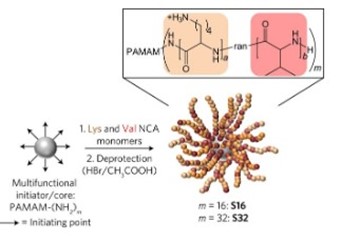
In 2016, our group discovered Structurally Nanoengineered Antimicrobial Peptide Polymers (SNAPPs) as a new class of antibacterial agent that showed non-specific bacterial killing, acting on a range of both Gram-positive and Gram-negative bacteria through rapid cell lysis by traversing and disrupting the cellular membrane, and A. baumannii was unable to evolve resistance to the SNAPPs even after 600 generations.
Our group is currently undertaking a range of research to investigate the applicability of SNAPPs in the healthcare industry.
Shabani, S.; Hadjigol, S.; Li, W.; Si, Z.; Pranantyo, D.; Chan-Park, M.B.; O'Brien-Simpson, N.M.; Qiao, G.G.; (2024) “Synthetic peptide branched polymers for antibacterial and biomedical applications” Nature Reviews Bioengineering SPRINGER SCIENCE & BUSINESS MEDIA LLC -.DOI 10.1038/s44222-023-00143-4

Antibiotic replacement
As SNAPPs are prepared using ring-opening polymerization the molecular weights can vary in range. To better mimic current antibiotics our group is optimising the SNAPP preparation to synthesize a SNAPP with an absolute molecular weight and controlled sequence to better understand how molecular weight affects activity against bacteria and human cells.
S. J. Lam, O'Brien-Simpson, N. M., Pantarat, N., Sulistio, A., Wong, E. H. H., Chen, Y-Y., Lenzo, J. C., Holden, J. A., Blencowe, A., Reynolds, E. C., Qiao, G. G., “Combating multidrug-resistant Gram-negative bacteria with structurally nanoengineered antimicrobial peptide polymers”, Nature Microbiology 2016, DOI: 10.1038/NMICROBIOL.2016.162
Antibacterial peptide surface
Our group is investigating the combination of SNAPPs with a simple and universal surface coating strategy to develop a broadly applicable new generation of antimicrobial materials. This combination would result in many commercially beneficial applications of antimicrobial surfaces for diverse industries, including in food manufacturing and medical implants. Influence of the SNAPP structure sequence on its ability to coat a surface will be investigated.
Automated antibacterial peptide synthesis
To further understand and optimise the interactions between SNAPP structure and antibacterial activity, our group is developing a new platform for synthesis and testing of antimicrobial star polymers. Automated polymer synthesis combined with high-throughput testing and data-driven structural prediction will rapidly improve the performance of SNAPPs and bring us closer to a solution to antimicrobial resistance.
Anti-Fouling Polymeric Surfaces
One of the areas of focus in PSG is engineering bio interfaces by the development of peptide-functionalized non/low-fouling polymers to study the interplay between physicochemical and biological cues and their biomedical application. In this regard, the PSG is collaborating with the Tissue Engineering Group of the University of Melbourne to designed and developed blood-compatible biomaterials for application in small-diameter vascular grafts. Using reversible addition-fragmentation chain transfer (RAFT) polymerization and specific functionalization with cell surface binding peptides derived from extracellular proteins, we also introduced a biomimetic non-fouling biomaterial based on comb copolymer of methyl methacrylate/PEG-methacrylate presenting arrays of different types of adhesive ligands nanoclusters. This bio interface could improve endothelialization and showed cell scavenging properties under shear flow conditions. Currently, an ongoing project is being carried out on using this system for muscle tissue engineering.
Nour, S.; Shabani, S.; Swiderski, K.; Lynch, G.S.; O'Connor, A.J.; Qiao, G.G.; Heath, D.E.; (2024) "Engineering Nanoclusters of Cell Adhesive Ligands on Biomaterial Surfaces: Superior Cell Proliferation and Myotube Formation for Skeletal Muscle Tissue Regeneration" Advanced Healthcare Materials WILEY -. DOI: 10.1002/adhm.202402991
 Karimi, F.; Thombare, VJ.; Hutton, CA.; O’Connor, AJ.; Qiao, GG.; Heath, DE. (2018) “Beyond RGD; nanoclusters of syndecan- and integrin-binding ligands synergistically enhance cell/material interactions”, Biomaterials ELSEVIER SCI LTD. pp: 81–92. DOI: 10.1016/j.biomaterials.2018.10.002
