Simulation and Automation of Polymer Synthesis
Simulation-Driven Optimisation of SNAPPs
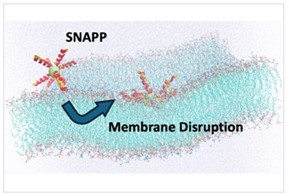
Molecular dynamics simulations, enhanced with machine learning, offer a powerful pathway for the rational design of macromolecules. Unlike traditional discovery approaches that rely on chemical intuition or trial-and-error experimentation, our computational framework enables predictive insights into how molecular sequence and structure influence antibacterial activity.
By employing high-resolution simulations, we can explore how sequence patterns shape molecular behaviour and interactions with bacterial membranes, uncovering fundamental mechanisms that underpin antimicrobial performance. These insights form the basis for systematic optimisation of Structurally Nanoengineered Antimicrobial Peptide Polymers (SNAPPs), advancing their potential as effective agents against multidrug-resistant bacteria.
To accelerate discovery, we integrate molecular simulations with advanced machine learning methodologies. This data-driven strategy expands the accessible chemical design space, captures key structure–function relationships, and enables the generation of predictive models to guide future development. In doing so, we create a robust computational platform for designing next-generation antimicrobial polymers.
More information about our collaboration with the Soft Matter Informatics group can be found in a recent article published here: https://pursuit.unimelb.edu.au/articles/how-to-snapp-a-bacterial-cell
Jayawardena, A.; Hung, A.; Qiao, G.G.; Hajizadeh, E.; (2025) "Molecular Dynamics Simulations of Structurally Nanoengineered Antimicrobial Peptide Polymers Interacting with Bacterial Cell Membranes" Journal of Physical Chemistry B AMER CHEMICAL SOC -; DOI: 10.1021/acs.jpcb.4c06691
Automated Synthesis of Precise Polymer Structures
Automation is transforming how we design and develop new materials. In polymer chemistry, it enables researchers to create well-defined macromolecules with precise structures and tailored properties—faster and more reliable than ever before.
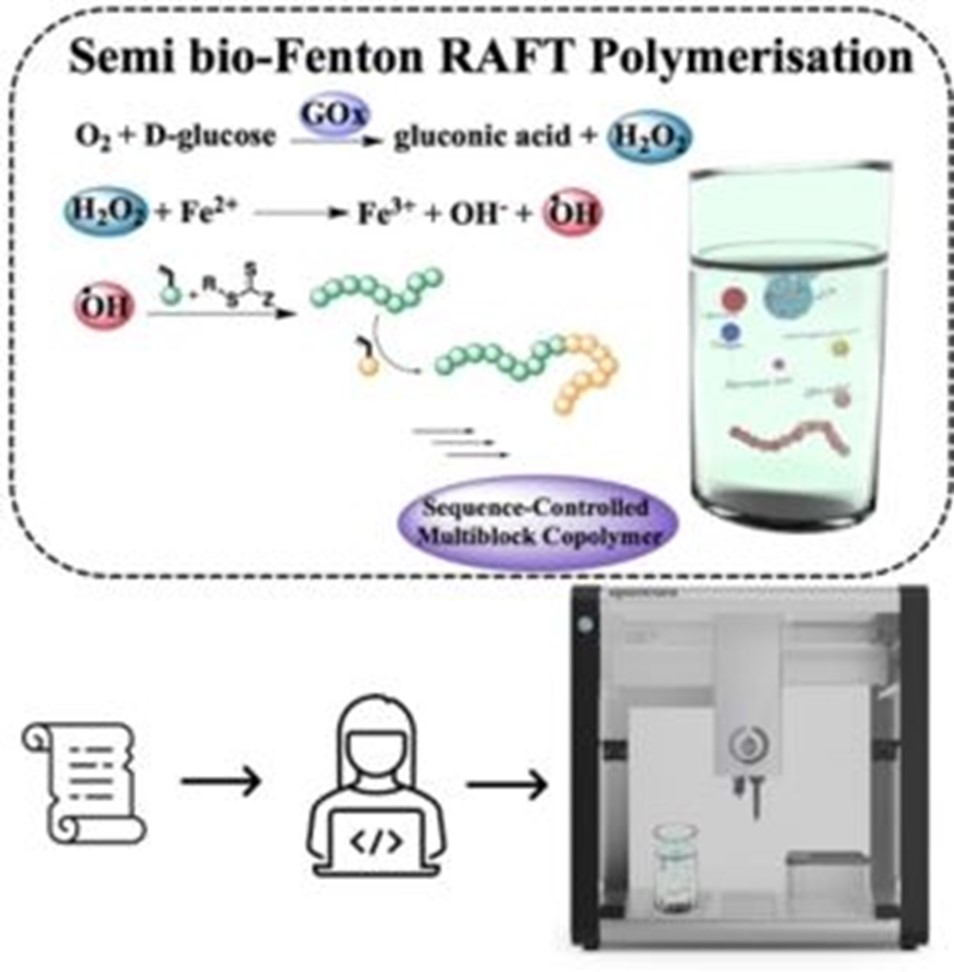
Our team develops closed-loop, high-throughput polymerisation platforms that combine automated synthesis with in-line characterisation. Data from each experiment is analysed in real time by machine learning algorithms, which guide the next steps in the process.
This approach allows us to generate large, high-quality datasets, explore vast chemical spaces, and uncover hidden structure–property relationships. Ultimately, our goal is to create autonomous workflows that can accelerate polymer discovery for applications ranging from medical materials to advanced manufacturing.
Jafari, V.F.; Mossayebi, Z.; Allison-Logan, S.; Shabani, S.; Qiao, G.; (2023) “The Power of Automation in Polymer Chemistry: Precision Synthesis of Multiblock Copolymers with Block Sequence Control” Chemistry-A European Journal WILEY-V C H VERLAG GMBH -DOI: 10.1002/chem.202301767
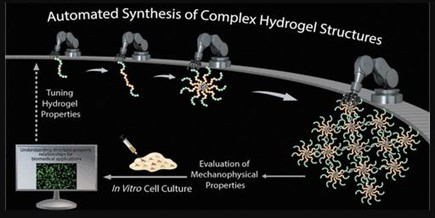
Jafari, V.F.; Nour, S.; Wylie, R.A.L.; Heath, D.E.; Qiao, G.G.; (2025) "Robot-Assisted Synthesis of Structure-Controlled Star-Cluster Hydrogels with Targeted Mechanophysical Properties for Biomedical Applications" Biomacromolecules AMER CHEMICAL SOC -; DOI: 10.1021/acs.biomac.4c01148